Ghost ants (Tapinoma melanocephalum) and Florida carpenter ants (Camponotus floridanus) present distinct structural and sanitary hazards across Tampa neighborhoods. Ghost ants average 1.5 to 2.0 millimeters in length…
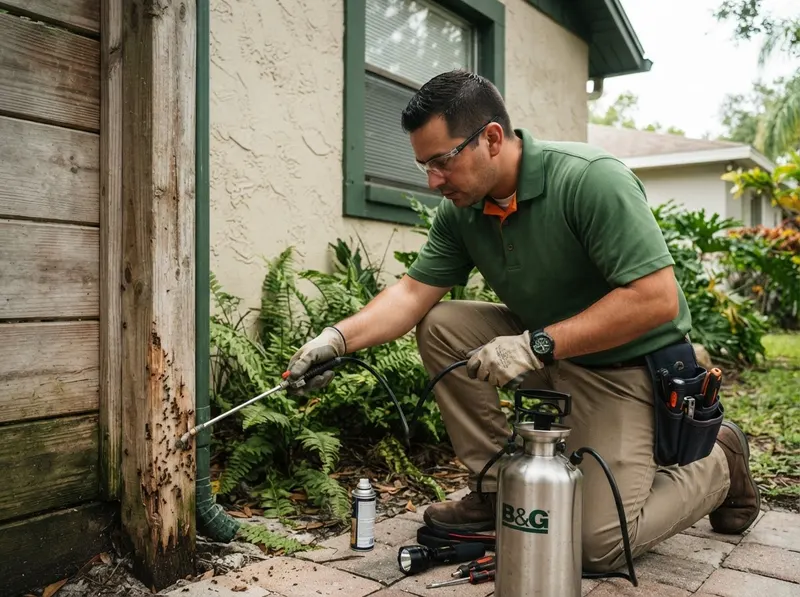
Ghost ants (Tapinoma melanocephalum) and Florida carpenter ants (Camponotus floridanus) present distinct structural and sanitary hazards across Tampa neighborhoods. Ghost ants average 1.5 to 2.0 millimeters in length and thrive in warm, damp wall voids near kitchen plumbing and baseboards in areas like Seminole Heights, Tampa Heights, and Ybor City. Store-bought repellent sprays fragment ghost ant supercolonies into multiple satellite nests through budding, multiplying an active infestation within 72 hours. In contrast, carpenter ants measure between 7 and 14 millimeters, carving nesting galleries into softened structural wood near roof leaks, fascia boards, and window sills in tree-canopied sections of Hyde Park and Palma Ceia. A targeted baiting matrix coupled with non-repellent transfer agents delivers active ingredients back to the queen without alerting the foraging worker line.
Decision guidance depends strictly on the insect's nesting habit and moisture source. If trails of pale-legged, translucent insects gather around sugary food spills or bathroom sinks, the home requires sweet-matrix ghost ant baits placed adjacent to active trailing lines. If coarse wood shavings known as frass appear beneath attic rafters or exterior wood siding along Bayshore Boulevard, the home requires non-repellent liquid treatments to eliminate the parent carpenter ant colony nesting inside structural framing. The trade-off between exterior barrier defense and localized interior baiting involves immediate colony interception versus delayed colony collapse; topical surface sprays disperse ants deeper into framing, whereas non-repellent applications require 3 to 10 days to achieve complete transfer across the nest.
Technicians evaluate specific perimeter vulnerabilities, including live oak limbs overhanging shingles in Ballast Point, crawlspace moisture in historic homes, and expanding expansion joints along concrete foundations in Westchase and New Tampa. 1. A physical perimeter survey identifies entry conduits, utility lines, and moisture pockets. 2. Non-repellent active barriers are applied 3 feet up the foundation wall and 5 feet outward to intercept foraging trails. 3. Tamper-resistant interior bait placements secure living spaces, avoiding contact with household dogs and cats once applied according to label directions. Every service operates with local accountability, eliminating insect pressures without forcing property owners into multi-year contract commitments.
Every job gets a firm, written price after a free on-site visit.
Tell us about your ghost & carpenter ant elimination job in Tampa and we'll send a clear, written quote, usually the same day.
 Palmetto Hawk Pest Control